 Call us now:


Adult Muscle Pain Care in 2026
Evaluating muscle pain inside an adult’s living room reveals clinical details that rarely surface during a fifteen-minute office appointment. In my clinical work coordinating in-home care through Reliable Healthcare Agency, our nurses and physical therapists regularly trace persistent myalgia to factors hidden at home: a low, soft sofa that forces sustained lumbar flexion, duplicate cholesterol prescriptions stored in separate kitchen baskets, mild dehydration during warm weather, or steep entryway steps that trigger protective muscle guarding. Muscle pain in adults known clinically as myalgia is one of the most frequent drivers of lost mobility, disrupted sleep, and preventable hospital readmissions.
Medical severe pain management in 2026 treats adult muscle pain as a functional diagnostic problem rather than an automatic cue for bed rest and sedating pills. Updated musculoskeletal guidelines favor early diagnostic sorting, targeted topical analgesics, graded neuromuscular rehabilitation, and strict limits on centrally acting skeletal muscle relaxants. When clinicians match treatment to the exact pain mechanism whether mechanical microtrauma, myofascial trigger points, drug induced myopathy, or systemic inflammation adults recover strength faster while avoiding dangerous medication side effects and falls.
Localized Musculoskeletal Pain Mechanism

Eccentric muscle contractions where a muscle lengthens under load, such as lowering a heavy box or descending stairs place high tensile stress across individual sarcomeres. Minor structural disruption produces delayed onset muscle soreness within 24 to 48 hours, whereas forceful overstretching causes acute grade I or grade II myofascial tears accompanied by localized edema. Chronic postural overload frequently generates myofascial trigger points: hyperirritable nodules nested within taut bands of skeletal muscle in the upper trapezius, quadratus lumborum, or gluteus medius that refer deep, aching pain into adjacent zones.
Medication Induced Myopathies in Home Care
Iatrogenic muscle pain surfaces routinely during home medication reviews, particularly among adults managing cardiovascular disease, diabetes, or chronic respiratory conditions. Loop and thiazide diuretics deplete intracellular potassium and magnesium, triggering painful nocturnal calf cramps. Oral corticosteroids taken for chronic lung disease or autoimmune flares break down structural muscle proteins, producing painless or mildly aching proximal muscle weakness. Fluoroquinolone antibiotics impair collagen integrity at myotendinous junctions, raising the risk of Achilles tendonitis and rupture.
Endocrine, Autoimmune, and Central Sensitization Disorders
Several non-mechanical conditions masquerade as stubborn muscle strain in middle-aged and older adults:
- Polymyalgia rheumatica (PMR): Seen almost exclusively in adults over age 50, PMR causes striking bilateral aching and morning stiffness lasting longer than 45 minutes across the neck, shoulder girdle, and pelvic girdle, driven by periarticular synovitis and bursitis.
- Hypothyroidism: Low circulating thyroid hormone slows mitochondrial oxidative metabolism inside skeletal muscle, leading to diffuse stiffness, cramping, delayed deep-tendon reflex relaxation, and elevated baseline CK levels.
- Vitamin D and Electrolyte Deficiencies: Severe 25-hydroxyvitamin D deficiency (below 20 ng/mL) impairs calcium transport within fast-twitch Type II muscle fibers, producing proximal weakness, diffuse musculoskeletal aching, and postural instability.
- Viral and Post-Infectious Myositis: Influenza, SARS-CoV-2, enteroviruses, and tick-borne pathogens provoke acute cytokine-mediated myalgia through interleukin-6 and interferon signaling.
- Fibromyalgia and Nociplastic Pain: Widespread pain lasting longer than three months alongside non-restorative sleep, fatigue, and cognitive fog reflects amplified central nervous system pain processing rather than ongoing peripheral tissue damage.
In-Home Clinical Triage and Diagnostic Red Flags
One advantage of skilled home health care is catching subtle clinical deterioration before an adult lands in the emergency department. During an admission visit at our agency, a 71-year-old gentleman recovering from a brief hospitalization complained of severe, worsening thigh pain that his family assumed was routine soreness from walking the hallway again. Rather than simply endorsing heat packs, our visiting nurse checked his transfer strength, inspected his hydration status, and reconciled his hospital discharge paperwork against his home pill bottles.
He could not rise from a dining chair without pushing hard on both armrests, his urine had turned dark amber, and he had unintentionally continued his old high dose statin alongside a newly added cardiac medication.
Rhabdomyolysis and Acute Compartment Syndrome
Rhabdomyolysis occurs when widespread skeletal muscle fiber necrosis dumps intracellular contents myoglobin, creatine kinase, potassium, uric acid, and phosphate directly into the bloodstream. While extreme exertion in hot weather triggers rhabdomyolysis in younger athletes, home health clinicians most often encounter it after an unwitnessed fall. When an older adult lies immobilized on a hard floor for several hours unable to reach a phone, sustained body weight compression starves gluteal and thigh muscles of blood flow, causing crush like necrosis upon reperfusion.
Neurological Compression and Infectious Red Flags
Immediate medical assessment is mandatory whenever adult muscle pain presents alongside any of the following red flags:
- New numbness in the groin or saddle area, difficulty initiating urination, urinary retention, or bowel incontinence (hallmarks of cauda equina syndrome)
- Severe back or limb myalgia paired with fever, chills, night sweats, or localized hot swelling (suggesting spinal epidural abscess, pyomyositis, or necrotizing soft-tissue infection)
- Bilateral shoulder aching accompanied by a new temple headache, scalp tenderness, jaw pain while chewing, or sudden visual blurring (warning signs of giant cell arteritis, which threatens permanent blindness)
- Progressive, asymmetric limb weakness, such as dragging one foot or dropping objects
- Unilateral calf tightness, pitting edema, warmth, and redness (characteristic of deep vein thrombosis mimicking a pulled calf muscle)
Targeted Biomarkers and Functional Mobility Scoring
When red flags are absent but adult myalgia persists beyond two to three weeks, clinicians combine targeted blood panels with objective functional benchmarks. Useful laboratory markers include serum creatine kinase (CK) and aldolase to detect muscle membrane breakdown; erythrocyte sedimentation rate (ESR) and C-reactive protein (CRP) to screen for polymyalgia rheumatica or occult infection; thyroid stimulating hormone (TSH); a comprehensive metabolic panel with magnesium and phosphorus; and 25-hydroxyvitamin D.
Inside the home, numerical 0-to-10 pain ratings tell only half the story. Our physical therapists track the PEG scale (Pain intensity, interference with Enjoyment of life, and interference with General activity) alongside the Timed Up and Go (TUG) test and the 30-Second Chair Stand test. A treatment plan succeeds only when lower pain scores translate into safer transfers, steadier gait, and deeper sleep.
Evidence Based Rehabilitation and Non Pharmacologic Care
Clinical guidelines from the American College of Physicians and the American Academy of Family Physicians place non-pharmacologic therapies and targeted local treatments at the center of musculoskeletal recovery. Active rehabilitation addresses the mechanical and circulatory roots of muscle pain without clouding cognition or destabilizing balance.
Home Physical and Occupational Therapy Protocols
Delivering physical and occupational therapy inside the patient’s residence eliminates guesswork. Instead of practicing generic exercises on a clinic plinth, the patient practices safe biomechanics on the exact bed height, bathroom layout, and staircase they use every morning.
Following an acute, uncomplicated muscle strain, relative rest should last no more than 24 to 48 hours. After that brief window, gentle pain guided range of motion work pumps stagnant interstitial fluid out of swollen fascia and stimulates mechanoreceptors that dampen spinal pain transmission. As acute spasm subsides, physical therapists introduce submaximal isometric holds, manual myofascial release.
Pharmacotherapy Options and Safe Medication Management

When severe muscle pain prevents an adult from sleeping, breathing deeply, or participating in physical therapy, carefully selected medication can bridge the gap toward active movement. Prescribers weigh kidney function, cardiovascular history, gastrointestinal bleeding risk, liver health, and concurrent prescriptions before choosing an agent.
For localized musculoskeletal injuries outside the lower back such as shoulder strain, knee periarthritis, calf pulls, or cervical myofascial pain clinical guidelines strongly endorse topical nonsteroidal anti inflammatory drugs (NSAIDs) such as diclofenac sodium 1% gel as first-line pharmacotherapy. Topical application delivers therapeutic drug concentrations directly into underlying subcutaneous fascia and superficial muscle bellies while producing less than one tenth the peak systemic plasma exposure of oral NSAID tablets. Topical lidocaine patches offer another well tolerated local option for focal myofascial tenderness.
When oral analgesics are needed, systemic NSAIDs (ibuprofen, naproxen, or COX-2-selective celecoxib) outperform placebo for acute low back and musculoskeletal pain, though they require caution or avoidance in adults with chronic kidney disease, heart failure, uncontrolled hypertension, peptic ulcer history, or concurrent anticoagulant use. Plain acetaminophen avoids gastric and renal prostaglandin inhibition, provided total daily intake from all prescription and over-the-counter sources stays strictly within liver-safe limits determined by the clinician.
Soma (Carisoprodol): Clinical Scope, Risks, and Safe Access
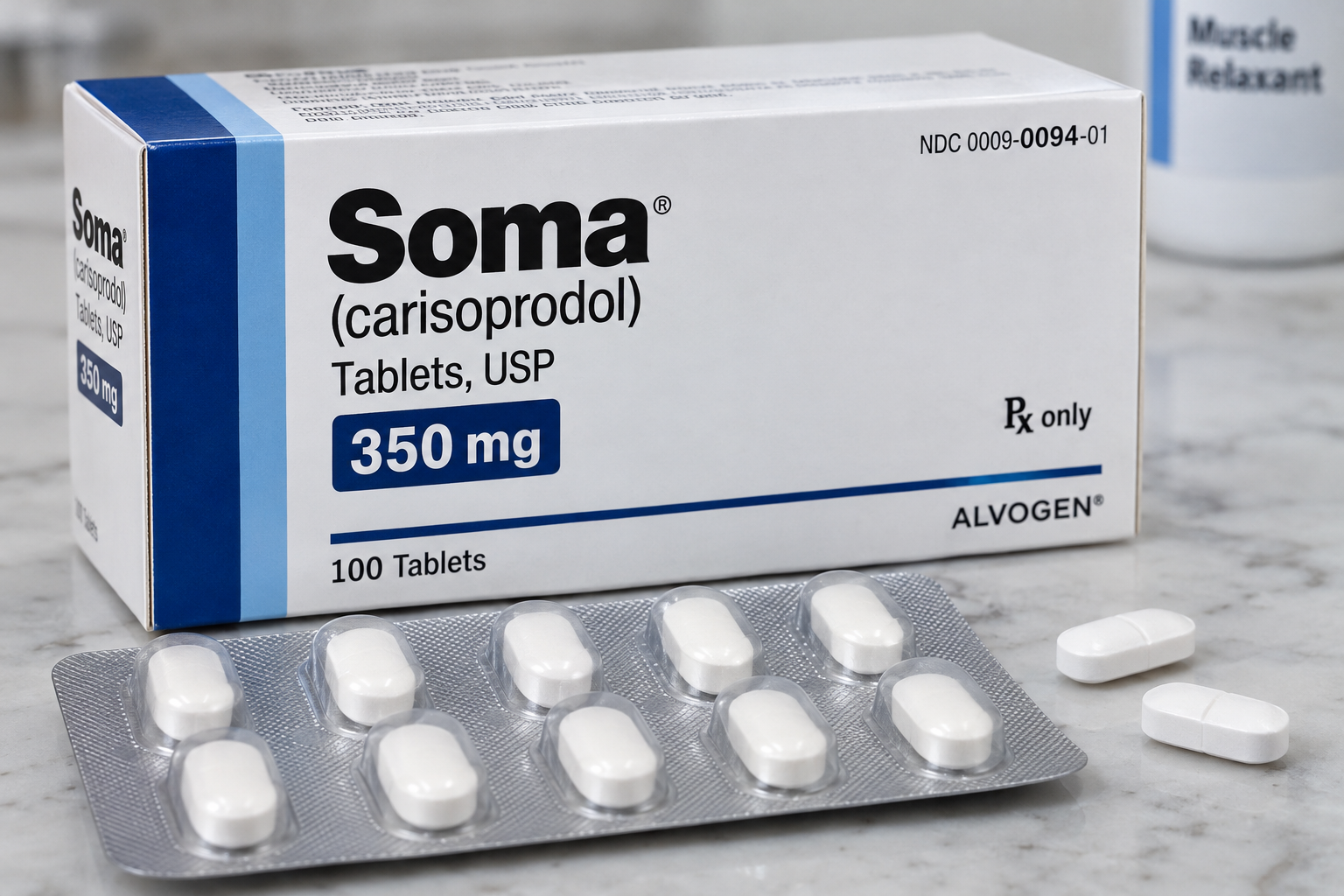
Soma, the brand name for Carisoprodol, is a centrally acting prescription skeletal muscle relaxant FDA-approved for the relief of discomfort associated with acute, painful musculoskeletal conditions in adults. Prescribing labeling restricts its use to short courses of up to two to three weeks alongside rest and physical therapy, because clinical evidence does not support long-term effectiveness and dependence hazards escalate rapidly with extended exposure.
Unlike peripheral anti inflammatory gels, Carisoprodol acts within the central nervous system and undergoes hepatic metabolism via the CYP2C19 enzyme into meprobamate an active sedative-anxiolytic metabolite with barbiturate like activity at GABA-A receptors. Due to documented rates of misuse, psychological and physical dependence, overdose, and severe withdrawal syndromes featuring anxiety, tremors, hallucinations, and seizures upon sudden discontinuation, Carisoprodol is classified federally as a Schedule IV controlled substance.
Furthermore, the American Geriatrics Society Beers Criteria strongly advises against prescribing skeletal muscle relaxants and Carisoprodol specifically to older adults because heavy sedation, psychomotor slowing, and dizziness substantially increase fall and hip-fracture rates, while co-administration with opioids, benzodiazepines, zolpidem, or alcohol creates a life-threatening risk of respiratory depression.
Safe and Legal Ways to Obtain Soma
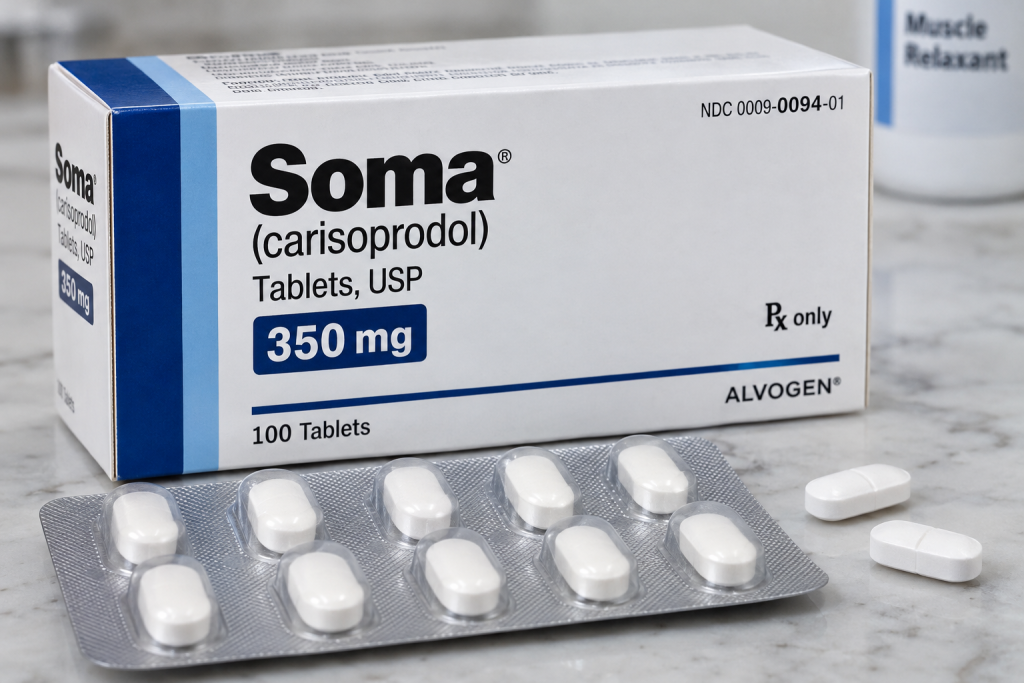
Adults immobilized at home by intense acute back or neck spasms often search for home delivery options, leading many to look up how to buy Soma online when driving to a neighborhood drugstore feels overwhelming. Anyone researching how to purchase Soma should recognize that as a Schedule IV controlled medication, carisoprodol legally and medically requires an individualized clinical evaluation and a valid prescription from a licensed, DEA-authorized healthcare practitioner.
If a physician determines that a carefully screened adult without substance-use risk or contraindicated sedatives warrants a brief course, the only safe pathway to buy prescription Soma is through an authenticated clinical consultation followed by fulfillment at a state-licensed pharmacy. Consumers tempted to ordering generic Soma from unverified websites advertising “no prescription required” or “instant overnight approval” face serious legal exposure and grave health hazards, as FDA laboratory testing repeatedly uncovers counterfeit muscle relaxant tablets containing wrong dosages, toxic contaminants, or illicit synthetic opioids.
Before you get Soma dispensed through any mail-order or digital pharmacy service, confirm the pharmacy’s active license with your state board of pharmacy, check accreditation through the National Association of Boards of Pharmacy (NABP) .pharmacy verification directory, and review FDA BeSafeRx standards. Every legitimate U.S. pharmacy displays a verifiable domestic street address, enforces strict prescription verification directly with the prescriber, and staffs licensed pharmacists to review CYP2C19 drug interactions and renal or hepatic precautions.
Within our daily home health operations at Reliable Healthcare Agency, whenever a physician prescribes a short course of generic Soma for an adult patient, our nursing team reconciles the exact pill count at admission, instructs household members on locked storage away from teens or visitors, monitors sedation and standing blood pressure before therapy walks, and coordinates prompt disposal of leftover tablets through DEA-authorized pharmacy take-back boxes once the two-week recovery window closes.
Coordinating Home Health Care and Long Term Prevention
Recovering from severe muscle pain rarely happens in a straight line, especially when an adult also manages diabetes, heart disease, osteoarthritis, or post-surgical weakness. Fragmented care where an urgent care clinic prescribes a muscle relaxant, a primary doctor adjusts a statin, and nobody watches how the patient climbs out of bed invites avoidable setbacks.
Multidisciplinary Oversight in the Home Environment
In home health practice, our strongest safety intervention is side-by-side medication reconciliation paired with caregiver coaching. Families frequently store multiple generations of pain relievers in a single cabinet: leftover prescription tablets from a prior injury, over-the-counter ibuprofen, nighttime sleep aids containing diphenhydramine, and daily low-dose aspirin. Consolidating every bottle onto one master list verified with the primary physician eliminates accidental double-dosing and sedative stacking. At the same time, physical therapists teach family caregivers how to assist with sit-to-stand transfers using proper gait-belt mechanics protecting both the recovering patient and the caregiver’s own lower back from acute strain.
Daily Habits That Protect Adult Muscle Tissue
Preventing recurrent episodes of disabling myalgia relies on steady physiological maintenance rather than occasional intense workouts:
- Consistent Hydration and Mineral Balance: Drink fluids steadily across morning and afternoon hours, and discuss potassium or magnesium monitoring with your clinician if you take daily diuretics for hypertension or fluid retention.
- Progressive Resistance Exercise: Two to three weekly sessions of light-to-moderate resistance training (using body weight, elastic bands, or light dumbbells) preserve motor unit density, tendon resilience, and joint stability across adulthood.
- Postural Micro-Breaks: Interrupt prolonged sitting, driving, or caregiving tasks every 45 minutes with 60 seconds of standing scapular retractions and gentle hip extension to prevent ischemic trigger points.
- Protected Sleep Architecture: Maintain a consistent wake schedule and supportive mattress alignment, since deep slow-wave sleep drives growth hormone release and overnight myofibrillar repair.
Frequently Asked Questions
When does muscle pain in adults require emergency medical care?
Muscle pain in adults requires emergency medical care when accompanied by dark or tea-colored urine, sudden limb weakness, high fever, numbness in the groin, loss of bladder or bowel control, or chest pain. These symptoms can indicate life-threatening emergencies such as rhabdomyolysis, cauda equina nerve compression, or deep tissue infection requiring immediate 911 evaluation.
Why do cholesterol medications sometimes trigger adult muscle pain?
Statin cholesterol medications can trigger muscle pain by altering cellular energy metabolism and calcium signaling within skeletal muscle fibers, particularly at higher doses or when combined with interacting prescriptions. Never stop a heart medication abruptly on your own; contact your prescriber promptly so they can check a creatine kinase blood level and adjust your regimen safely.
Is complete bed rest effective for severe muscle spasms?
No, prolonged bed rest worsens adult muscle pain by accelerating muscle atrophy, stiffening connective fascia, and prolonging the pain-spasm cycle. Clinicians recommend no more than 24 to 48 hours of relative rest after an acute strain before transitioning into gentle, pain-guided movement and physical therapy.
Where can adults safely buy prescription Soma online for acute muscle spasms?
Adults can safely buy prescription Soma online only through a U.S. state-licensed, NABP-accredited pharmacy that requires a valid prescription from a DEA-authorized clinician and provides direct pharmacist consultation. Avoid any website offering carisoprodol without a medical exam, as unregulated sellers violate federal Schedule IV controlled-substance laws and frequently ship dangerous counterfeit pills.